Why this sample
Language apps are good at vocabulary and weak at speaking, because speaking needs a partner. A tutor that plays a role inside a lesson, and listens to how you say things, closes that gap. It is a typical Product-tier job: a mobile app, a web admin, an API, and an AI part with clear limits.
This is a sample build. There is no client, and nothing here is a result from a real company.
What it does
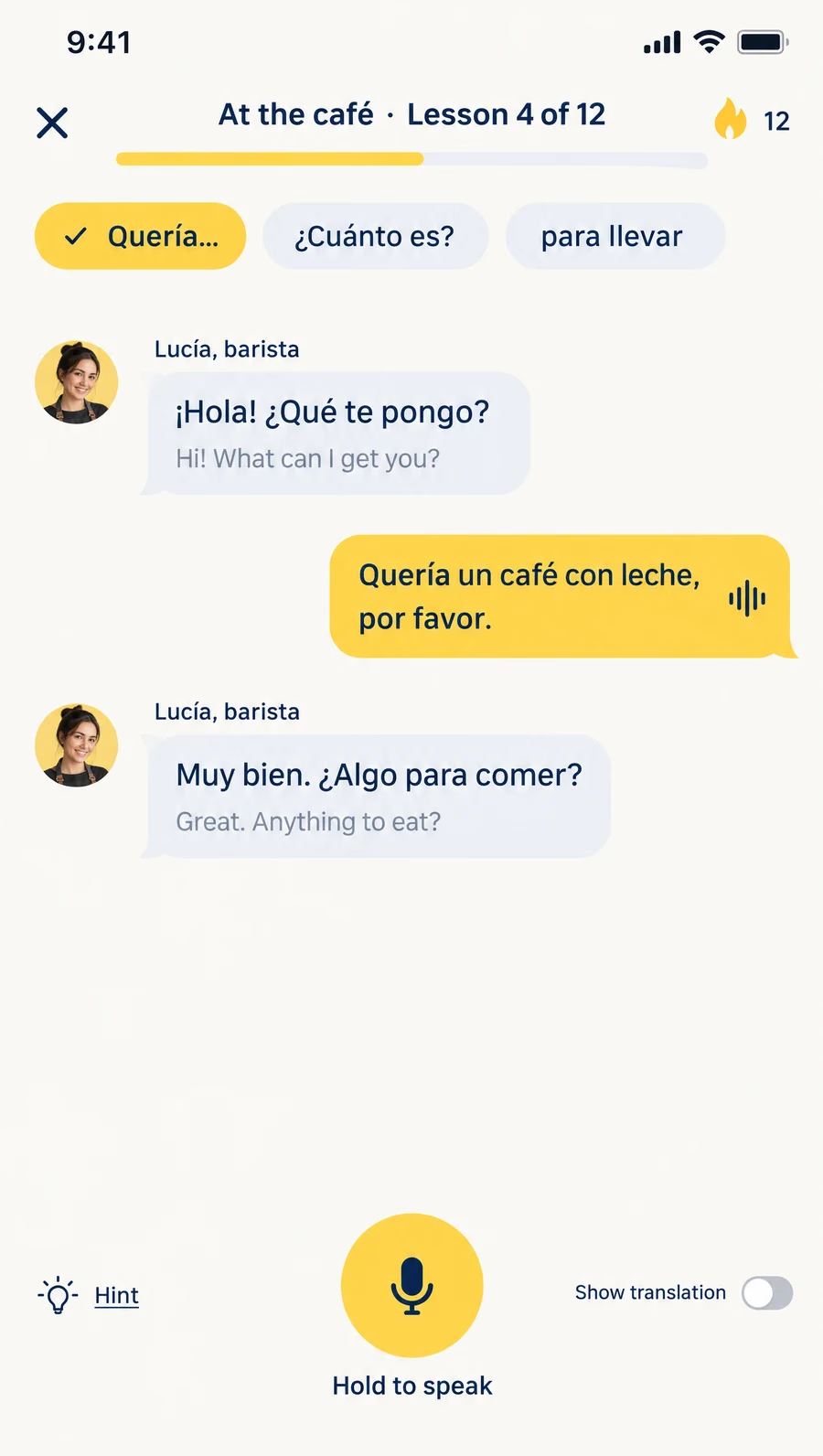
- Runs short role-plays, like ordering at a café or asking for directions, by voice.
- Keeps the tutor inside the lesson: the setting, the goal, the phrases and the level.
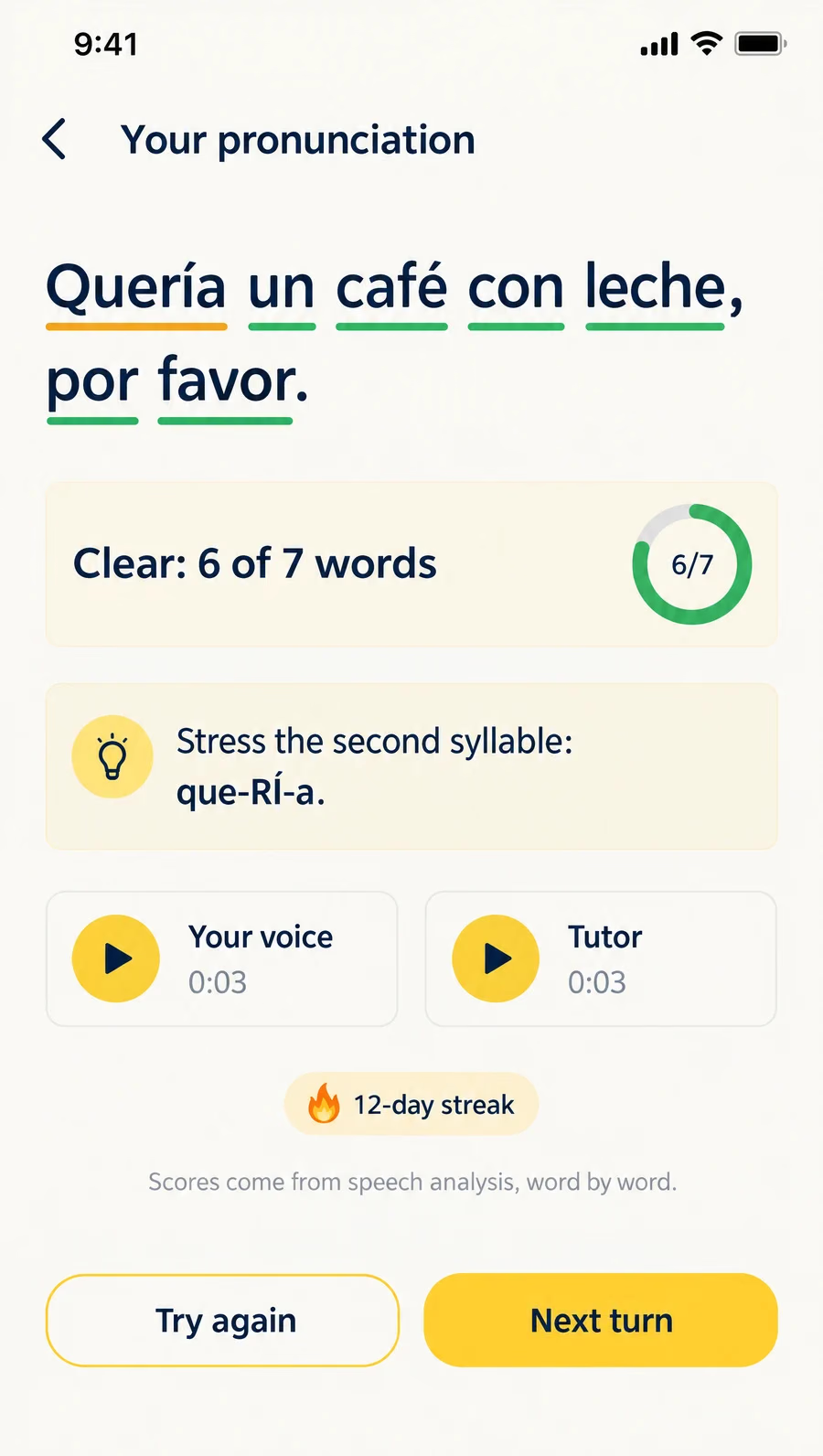
- Scores pronunciation per word and lets the learner hear both versions and try again.
- Tracks a daily streak and sends one reminder a day, at a time the learner picks.
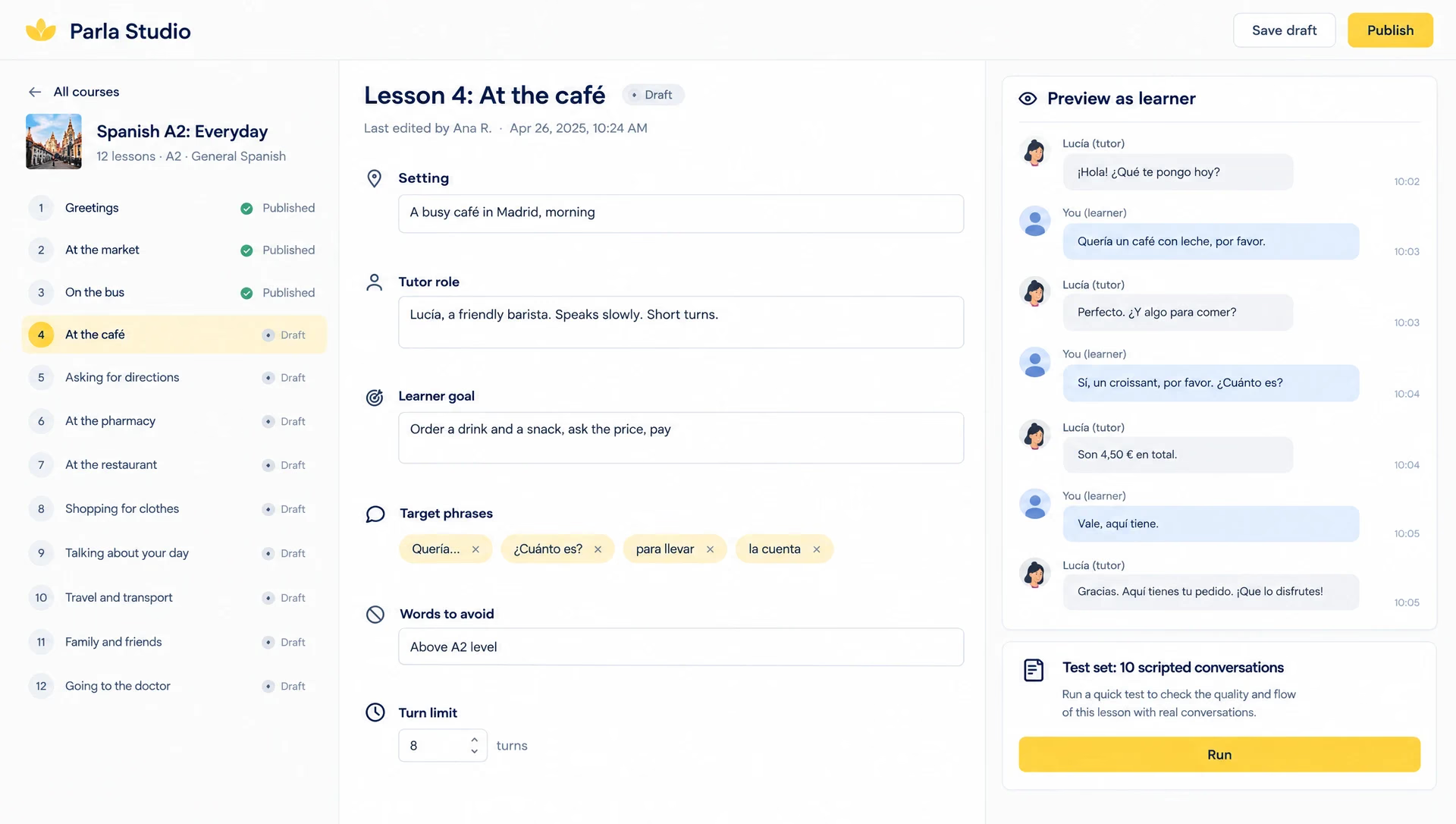
- Gives lesson authors a web admin to write scenarios, set target phrases and preview the tutor.
The AI part
The tutor is a language model that plays one role inside a lesson an author wrote. It answers in short turns at the learner’s level, stays in the scenario and steers back if the learner drifts. It does not discuss off-topic or unsafe subjects, and it never grades a learner’s level for a certificate.
Pronunciation feedback comes from a speech service that scores each word, not from the language model. We would test each lesson with a set of scripted learner turns, including off-topic and rude ones, and have a language teacher review the transcripts.
Where it stops
No live human tutors, no payments and no offline mode. Subscriptions and more languages are next steps, once the core speaking loop works.
Timeline
| When | What happened |
|---|---|
| Week 1 | Data model for courses, lessons and attempts; the API; a first app build on test phones. |
| Week 2 | Onboarding, a short level check, the home screen with today's lesson. |
| Week 3 | Role-play screen with voice in and out, the tutor following a lesson script. |
| Week 4 | Pronunciation feedback per word from the speech service, the retry flow. |
| Week 5 | Streaks, reminders, the progress view. |
| Week 6 | Web admin for lesson authors: scenario editor, target phrases, preview. |
| Week 7 | Safety rules for the tutor, a test set of conversations per lesson, review with a language teacher. |
| Week 8 | Store builds, privacy texts, load test, runbook and handover. |